For the last few years our leather couches have been tucked away in a sitting area. But with our new home they are out in the open, by the kitchen, with three little kids and a dog having full access to them.
Are you getting a mental picture of how gross they have become?
I bought some leather cleaner but wasn't very impressed with it, it didn't seem to work very well. Plus it had a warning label that pretty much said if my children come into contact with it then they will die a slow painful death. So I made my own.
Homemade Leather Cleaner
You Will Need:
1/4 cup olive oil
1/2 cup regular vinegar
a spray bottle
Just mix the two ingredients together in your spray bottle and shake it
well. Now you just have to spray the leather down and wipe it clean with
a cotton cloth. Please note that this recipe is perfectly safe for regular leather but is it not designed to be used on suede.
I sprayed one section of the couch and wiped it all down. Then I used the store bought leather cleaner on the section next to it to see how they compare.
The Verdict: It was SO much better then the store bought. The first thing I noticed was that the olive oil didn't clog up my bottle. Which was a huge plus.
Before.
After The DIY is on the left and the store bought is on the right
Here is a list of how the DIY did better then the store bought;
It went farther. The store bought kind was individual cloths and I had to use 2 of them for just that small section on the couch.
The DIY had the same shine as the store bought but it the shine lasted longer
There wasn't a reside left over
The DIY didn't just shine, it also got off all the gunk from the kids sticky hands and the dogs wet nose.
Showing posts with label Cleaning. Show all posts
Monday, July 7, 2014
Sunday, June 22, 2014
Cleaning With Just Water
When I started this blog I gave myself one rule "This blog is only going to be my experience with DIY's" which meant I wasn't going to promote anything and I wasn't going to talk about anything controversial such as politics, religion etc.
Today I'm going to have to break my own rule because I'm just so excited about my recent discovery of the greatest way to clean my house.
Have you ever come across something that impacts your life in such a positive way that you can't wait to tell everyone about it?
That is how I feel with Norwex. Their microfiber cloths are AMAZING. Not only do they require less scrubbing, but because the microfiber has silver woven into them, they inhibit bacteria from growing. Basically the cloths purify themselves. How cool is that?!?!
Want proof? Check this out
I'm so in love with these that I decided to be a consultant and sell them. But here is my favorite part. I am only going to do facebook parties. I get to share my excitement and introduce people to chemical free cleaning without going to someones home where people feel pressure to buy.
So if anyone is interested in hosting an online party then feel free to contact me. You can leave a comment here or email me at thediyguineapig@gmail.com
Here are 5 reasons you should host a facebook party:
1)Earn free products. On average, a host/hostess gets $250 worth of free products.
2) No in-home party means no after party clean up.
3)Your guest list isn't limited by geographic location.
4)All the host/hostess has to do to prepare is invite friends (after I create the event), then send out some private messages.
5)Parties are only 30 min.
With one of the Norwex enviro cloths you can clean your entire house. Bathrooms, walls, stainless steel, windows, cupboards, etc.
Today I'm going to have to break my own rule because I'm just so excited about my recent discovery of the greatest way to clean my house.
Have you ever come across something that impacts your life in such a positive way that you can't wait to tell everyone about it?
That is how I feel with Norwex. Their microfiber cloths are AMAZING. Not only do they require less scrubbing, but because the microfiber has silver woven into them, they inhibit bacteria from growing. Basically the cloths purify themselves. How cool is that?!?!
Want proof? Check this out
I'm so in love with these that I decided to be a consultant and sell them. But here is my favorite part. I am only going to do facebook parties. I get to share my excitement and introduce people to chemical free cleaning without going to someones home where people feel pressure to buy.
So if anyone is interested in hosting an online party then feel free to contact me. You can leave a comment here or email me at thediyguineapig@gmail.com
Here are 5 reasons you should host a facebook party:
1)Earn free products. On average, a host/hostess gets $250 worth of free products.
2) No in-home party means no after party clean up.
3)Your guest list isn't limited by geographic location.
4)All the host/hostess has to do to prepare is invite friends (after I create the event), then send out some private messages.
5)Parties are only 30 min.
With one of the Norwex enviro cloths you can clean your entire house. Bathrooms, walls, stainless steel, windows, cupboards, etc.
Thursday, December 26, 2013
Hand Sanitizer
I don't consider myself a germ freak, but I do like things to be very clean and organized and during the winter months I load the family up with soap and hand sanitizer whenever we go anywhere.
Last year I tried to make my own hand sanitizer because I get frustrated with how quickly my hands dry out with the store bought kind, plus I just like to try and make my own stuff.
DIY Hand Sanitizer.
You Will Need:
(1) 12 ounce bottle of 100% Pure Aloe Vera Gel {It must be clear and say 100% on the bottle!}
3/4 teaspoon of Tea Tree Oil
Witch Hazel
Directions:
In a glass bowl, mix Aloe Vera and Tea Tree Oil. Then add witch hazel until you have the consistency you want your sanitizer to be
First of all, it was almost impossible to find 100% aloe vera gel. Every store I went to had the blue kind with lidocaine in it. I finally just ordered a bottle from Amazon.
This particular recipe says it is alcohol free. I found other recipes that are very similar that say you can add alcohol if you want to. I decided to put 2 Tablespoons of rubbing alcohol into my mixture. Maybe it was a mental block, but how can it really kill off the germs without alcohol?
I mixed everything together until I got a good gel
Then put it into little travel size bottles.
The verdict: Without setting up my own science lab with microscopes and petri dishes, there is no way to know if this stuff kills germs as effectively as the store bought kind but I can tell you four things about it:
It's sticky - if you have used aloe vera gel then you know what I mean. It has a slight sticky texture until it dries and it takes longer to dry then the store bought kind.
My hands weren't as dry - they still dried out a but but it wasn't as bad as using the store bought kind
It's smelly - each of the ingredients has a strong distinct odor and when you combine them all into a bottle then look out, your sniffer will get an overload
We were healthier - It could be pure coincidence, but we used it during the whole cold/flu season last year and that was the healthiest our family has ever been. We each got a couple minor colds but that was it. Nothing major.
I had planned on using it again this winter to see if we stayed healthier again, but my pregnant sniffer can't handle the smell this time around.
Last year I tried to make my own hand sanitizer because I get frustrated with how quickly my hands dry out with the store bought kind, plus I just like to try and make my own stuff.
DIY Hand Sanitizer.
You Will Need:
(1) 12 ounce bottle of 100% Pure Aloe Vera Gel {It must be clear and say 100% on the bottle!}
3/4 teaspoon of Tea Tree Oil
Witch Hazel
Directions:
In a glass bowl, mix Aloe Vera and Tea Tree Oil. Then add witch hazel until you have the consistency you want your sanitizer to be
First of all, it was almost impossible to find 100% aloe vera gel. Every store I went to had the blue kind with lidocaine in it. I finally just ordered a bottle from Amazon.
This particular recipe says it is alcohol free. I found other recipes that are very similar that say you can add alcohol if you want to. I decided to put 2 Tablespoons of rubbing alcohol into my mixture. Maybe it was a mental block, but how can it really kill off the germs without alcohol?
I mixed everything together until I got a good gel
Then put it into little travel size bottles.
The verdict: Without setting up my own science lab with microscopes and petri dishes, there is no way to know if this stuff kills germs as effectively as the store bought kind but I can tell you four things about it:
It's sticky - if you have used aloe vera gel then you know what I mean. It has a slight sticky texture until it dries and it takes longer to dry then the store bought kind.
My hands weren't as dry - they still dried out a but but it wasn't as bad as using the store bought kind
It's smelly - each of the ingredients has a strong distinct odor and when you combine them all into a bottle then look out, your sniffer will get an overload
We were healthier - It could be pure coincidence, but we used it during the whole cold/flu season last year and that was the healthiest our family has ever been. We each got a couple minor colds but that was it. Nothing major.
I had planned on using it again this winter to see if we stayed healthier again, but my pregnant sniffer can't handle the smell this time around.
Monday, October 21, 2013
Carpet Cleaner with Oxiclean
This one was sent to me via email and when I read the ingredients I was pretty excited. (Yes my life is pretty dull when I get excited about cleaning products. Just last night I had a dream that I cleaned my whole house and I woke up really happy. I think I need a new hobby that doesn't involve cleaning)
I really like the DIY carpet cleaner I have been using, but because it has hydrogen peroxide in it, it can bleach some darker carpets.
Carpet Shampoo Solution
1 Cup Oxiclean
1 Cup Febreze
1 Cup distilled white vinegar
Directions:
Pour contents into shampooer tank and mix with hot water to fill tank completely. This will not only clean your carpets it will also deodorize. It will smell slightly of vinegar until the carpet is dry, then will smell like Febreze.
I didn't have any Febreze so I made my own. I mixed all the ingredients together and got a fun little surprise.
Apparently Oxiclean and vinegar have a fun chemical reaction. Fortunately the bubbles popped very quickly so I didn't have to wait long to continue with the experiment.
The directions say to pour the mixture into a shampoo tank then fill the rest with hot water. Because each shampoo tank is a different size I assume this can change the outcome. My carpet cleaner is a little hand held one so I poured in half the solution, then filled up the rest with hot water.
The Verdict: Inconclusive. Let me explain why. I set up my carpet cleaner then pressed the button to spray the solution. I got one good squirt, then a little dribble, then nothing. The hose was completely clogged and nothing would come out. Of course I immediately blamed it on the DIY solution I just put in (ignoring the fact that I've only used DIY products in that machine) then I got online to see what I could do about it.
Apparently getting a clogged hose after about a year is very common with the particular brand I have, even if you only use the carpet cleaning solution that comes with the machine. So I guess the homemade solutions aren't to blame.
I found a tutorial online about unclogging the hose and got to work. As I was using the needle nose pliers to unclasp the hose, my hand slipped and I pierced a hole all the way through the hose. The lovely un-lady like outburst I had sent our skittish dog scurrying to the other room. Sorry Bud.
So now I had a new carpet cleaning solution just begging to be tested, and no machine. Time to get old school.
I found a scrub brush, dipped it into the solution and scrubbed my carpet. Then blotted up the extra with a towel.
It got a majority of the stains out but I had to scrub a bit hard. It also left little Oxiclean pellets behind, but they vacuumed up easily once they dried.
I then tried a spot on the couch (I have no idea what it is, it just appeared one day) and it didn't even lighten it.
So over all it worked pretty good on my carpet. I like to think that it would work great in a carpet cleaner, but it will be a while until I can buy a new one and test it out.
If you have tried this solution before I would love to hear what you think about it.
I really like the DIY carpet cleaner I have been using, but because it has hydrogen peroxide in it, it can bleach some darker carpets.
Carpet Shampoo Solution
1 Cup Oxiclean
1 Cup Febreze
1 Cup distilled white vinegar
Directions:
Pour contents into shampooer tank and mix with hot water to fill tank completely. This will not only clean your carpets it will also deodorize. It will smell slightly of vinegar until the carpet is dry, then will smell like Febreze.
I didn't have any Febreze so I made my own. I mixed all the ingredients together and got a fun little surprise.
Apparently Oxiclean and vinegar have a fun chemical reaction. Fortunately the bubbles popped very quickly so I didn't have to wait long to continue with the experiment.
The directions say to pour the mixture into a shampoo tank then fill the rest with hot water. Because each shampoo tank is a different size I assume this can change the outcome. My carpet cleaner is a little hand held one so I poured in half the solution, then filled up the rest with hot water.
The Verdict: Inconclusive. Let me explain why. I set up my carpet cleaner then pressed the button to spray the solution. I got one good squirt, then a little dribble, then nothing. The hose was completely clogged and nothing would come out. Of course I immediately blamed it on the DIY solution I just put in (ignoring the fact that I've only used DIY products in that machine) then I got online to see what I could do about it.
Apparently getting a clogged hose after about a year is very common with the particular brand I have, even if you only use the carpet cleaning solution that comes with the machine. So I guess the homemade solutions aren't to blame.
I found a tutorial online about unclogging the hose and got to work. As I was using the needle nose pliers to unclasp the hose, my hand slipped and I pierced a hole all the way through the hose. The lovely un-lady like outburst I had sent our skittish dog scurrying to the other room. Sorry Bud.
So now I had a new carpet cleaning solution just begging to be tested, and no machine. Time to get old school.
I found a scrub brush, dipped it into the solution and scrubbed my carpet. Then blotted up the extra with a towel.
| Before |
| After |
I then tried a spot on the couch (I have no idea what it is, it just appeared one day) and it didn't even lighten it.
So over all it worked pretty good on my carpet. I like to think that it would work great in a carpet cleaner, but it will be a while until I can buy a new one and test it out.
If you have tried this solution before I would love to hear what you think about it.
Monday, September 30, 2013
Two Methods to Removing Hard Water Spots
I have a water softener in my home, so I'm pretty fortunate and don't have to deal with hard water stains. However, when we first moved in it was obvious that the water softener wasn't functioning, so a few of my faucets had some minor hard water spots.
I had seen several photos on Pinterest about using a lemon to remove hard water spots and decided to give it a try.
Hard Water Spot Removal
You Will Need:
A fresh lemon
Directions:
Cut the lemon in half and rub it all over the hard water spots until they are gone.
My shower head was the worse (again, it wasn't that bad comparative to homes without a water softener) so I waited until it was dry, then cut open a lemon and rubbed it all over the shower head for about 1minute.
The Verdict: It worked great. Every spot came right off and I didn't even scrub, I just used a little bit of pressure when rubbing the lemon around.

About a month after I did this, my cousin texted me a photo of her sink faucet asking me how to remove the hard water build up she had. She had tried vinegar but it stripped away some of the finish. I was afraid the lemon would do the same thing so I told her to make a paste of baking soda and water and use that to scrub the hard water build up.
Hard Water Cleaner For Finished Metals
You will need:
Baking Soda
Water
Directions: Mix the baking soda and water into a paste then scrub it onto the hard water until it comes off.
The Verdict: You can see it didn't get everything off, but it made a huge difference and she said it didn't harm her finish.
To bad cleaning the rest of my house isn't as easy as rubbing a lemon around.
I had seen several photos on Pinterest about using a lemon to remove hard water spots and decided to give it a try.
Hard Water Spot Removal
You Will Need:
A fresh lemon
Directions:
Cut the lemon in half and rub it all over the hard water spots until they are gone.
My shower head was the worse (again, it wasn't that bad comparative to homes without a water softener) so I waited until it was dry, then cut open a lemon and rubbed it all over the shower head for about 1minute.
The Verdict: It worked great. Every spot came right off and I didn't even scrub, I just used a little bit of pressure when rubbing the lemon around.
About a month after I did this, my cousin texted me a photo of her sink faucet asking me how to remove the hard water build up she had. She had tried vinegar but it stripped away some of the finish. I was afraid the lemon would do the same thing so I told her to make a paste of baking soda and water and use that to scrub the hard water build up.
Hard Water Cleaner For Finished Metals
You will need:
Baking Soda
Water
Directions: Mix the baking soda and water into a paste then scrub it onto the hard water until it comes off.
The Verdict: You can see it didn't get everything off, but it made a huge difference and she said it didn't harm her finish.
To bad cleaning the rest of my house isn't as easy as rubbing a lemon around.
Friday, September 20, 2013
White Board Cleaner
I tend to forget things which is why I use both my phone and a white board to keep notes and reminders.
After several years of use my white board had turned into a stained gray board. I looked around online and found some ways to clean it, so I divided my white board into sections and tried them all.
I used:
Hand sanitizer
Rubbing alcohol
Nail polish remover
Witch hazel
For each one, I put the product on a cotton ball then rubbed the white board.
I'll spare you the details of how each one worked (since odds are you won't read it anyways and I currently have a little girl begging me to play Guess Who right now) and skip right to the verdict.
The Verdict: They all worked, but the rubbing alcohol was the best one. I didn't have to scrub at all, it took everything off and didn't harm the white board at all.
I also have a calendar white board that is of the cheaper version. It's almost like a cheap white board type paper was wrapped around a thick piece of cardboard. I tried all the products on this cheap white board and got the same result. The rubbing alcohol took everything off with little effort and with no visible damage to the white board.
And thanks to my lovely daughter, I now know that rubbing alcohol will take permanent marker off a white board.

Seriously, why in the world did I leave a permanent marker out when I know she's prone to draw on everything?
After several years of use my white board had turned into a stained gray board. I looked around online and found some ways to clean it, so I divided my white board into sections and tried them all.
I used:
Hand sanitizer
Rubbing alcohol
Nail polish remover
Witch hazel
For each one, I put the product on a cotton ball then rubbed the white board.
I'll spare you the details of how each one worked (since odds are you won't read it anyways and I currently have a little girl begging me to play Guess Who right now) and skip right to the verdict.
The Verdict: They all worked, but the rubbing alcohol was the best one. I didn't have to scrub at all, it took everything off and didn't harm the white board at all.
I also have a calendar white board that is of the cheaper version. It's almost like a cheap white board type paper was wrapped around a thick piece of cardboard. I tried all the products on this cheap white board and got the same result. The rubbing alcohol took everything off with little effort and with no visible damage to the white board.
And thanks to my lovely daughter, I now know that rubbing alcohol will take permanent marker off a white board.
Seriously, why in the world did I leave a permanent marker out when I know she's prone to draw on everything?
Monday, August 26, 2013
Reusable Paper Towels
I once saw reusable paper towels on Etsy and was very intrigued by them. I liked the idea of having paper towels that I could use over and over again. What I wasn't intrigued by was the price. I'm cheap (hence all the DIY projects)
Several months later I just happen to come across a tutorial for making your own.
Reusable Paper Towels
You Will Need
Directions:
Instead of putting a whole list of instructions that will make no sense, I suggest just going to the original website. It has a very useful step by step guide with photos.
I didn't like the idea of snaps. I wanted to be able to quickly grab one of the towels, and not have to stop and fiddle with two snaps (yes, I'm that lazy) So I decided to try Velcro instead. I couldn't figure how to sew the Velcro on so I super glued it, accepting that it would probably fall off.
I got all my materials and got to work. I did half of them with terry cloth and half with an old garage towel. I'll tell you right now, I prefer the ones with the old garage towel because it soaks up liquid faster.
My husband saw me actually using the sewing machine and asked what I was doing. I told him all about my fantastic reusable paper towels and the following conversation took place.
Him; "Sooooo, their washcloths."
Me; "No, they are cute cloths that we will have on the counter that we can use just like paper towels."
Him: "Sooooo, cute washcloths on the counter."
Me; "Ok fine Captain Obvious, they are cute washcloths that will sit on the counter."
Him; "Thank you, once again I am right."
Welcome to my marriage folks.
The Verdict: I have horrible sewing skills, but these were easy to make and not very time consuming. The Velcro worked great (at first) and the towels rolled up on the tube with no problem. I started out with 6 then eventually made another 6. 12 seems to be a good amount. There has only been a few times when I've gone through the whole roll before washing them.
My favorite use for them is scrubbing the kids after dinner. I love being able to grab a clean cloth and toss it at them. And because it's cloth, it's a whole lot more durable then a paper towel.
They aren't as cute as they use to be. After about a month all the Velcro came off, which means they don't stay on the paper towel roll as nicely. Some of the threading is starting to wear and the white terry cloth is mostly gray at this point, but you can't see it when it's all rolled up. Even though they are frumpy looking now I still love them and plan on using them until they disintegrate.

Several months later I just happen to come across a tutorial for making your own.
Reusable Paper Towels
You Will Need
Supplies (for one towel)
Basic sewing supplies
Cotton print, 11.5 x 11.5
Terry cloth, 11.5 x 11.5
Plastic snaps and the assembly/installation tools
Coordinating thread
and old paper towel tube
Instead of putting a whole list of instructions that will make no sense, I suggest just going to the original website. It has a very useful step by step guide with photos.
I didn't like the idea of snaps. I wanted to be able to quickly grab one of the towels, and not have to stop and fiddle with two snaps (yes, I'm that lazy) So I decided to try Velcro instead. I couldn't figure how to sew the Velcro on so I super glued it, accepting that it would probably fall off.
I got all my materials and got to work. I did half of them with terry cloth and half with an old garage towel. I'll tell you right now, I prefer the ones with the old garage towel because it soaks up liquid faster.
My husband saw me actually using the sewing machine and asked what I was doing. I told him all about my fantastic reusable paper towels and the following conversation took place.
Him; "Sooooo, their washcloths."
Me; "No, they are cute cloths that we will have on the counter that we can use just like paper towels."
Him: "Sooooo, cute washcloths on the counter."
Me; "Ok fine Captain Obvious, they are cute washcloths that will sit on the counter."
Him; "Thank you, once again I am right."
Welcome to my marriage folks.
The Verdict: I have horrible sewing skills, but these were easy to make and not very time consuming. The Velcro worked great (at first) and the towels rolled up on the tube with no problem. I started out with 6 then eventually made another 6. 12 seems to be a good amount. There has only been a few times when I've gone through the whole roll before washing them.
I've been using them for 6 months and love them. Because I have the mentality that they are "paper towels" I use them on everything and don't care if they stain. I've used them on things like getting chocolate frosting off the floor, and scrubbing paint off the table.
They aren't as cute as they use to be. After about a month all the Velcro came off, which means they don't stay on the paper towel roll as nicely. Some of the threading is starting to wear and the white terry cloth is mostly gray at this point, but you can't see it when it's all rolled up. Even though they are frumpy looking now I still love them and plan on using them until they disintegrate.
Wednesday, August 7, 2013
DIY Febreze
Over the last several months I have had many inquires about homemade Febreze and my answer was always the same "I haven't tried it yet, but it's on my list." I was planning on testing it eventually, but it wasn't a big priority.
Last week when my younger sister asked about homemade Febreze she apparently didn't approve of my response because about 20 minutes later I got a text from her telling me that she just made her own and what she thought of it.
So this blog post is courtesy of my younger sister, Pig. Why do I call her Pig? I have no idea, but that's been her nickname for the last 20+ years.
Homemade Febreze
You Will Need:
1/8 Cup of Your Favorite Fabric Softener
2 Tablespoons Baking Soda
Hot Tap Water - enough to fill the bottle (Pig used a 16 oz bottle)
Directions:
Pour all the ingredients into a spray bottle and shake until well mixed. Spray onto any fabric surface.
Looking around the Internet I have found many variations of this recipe so it looks like you could play around with the amount of ingredients until you get a combination that works for you.
Pig, mixed her ingredients together then used the spray on her couches
Disclaimer: Neither of us use store bought Febreze so we can't tell you how it compares, all I can give you is her opinion of the homemade stuff.
The Verdict: Pig said "My couches, the whole living room, smells super yummy." It didn't last long though. Pig said by that evening the smell was completely gone and her couches smelt the same as they always do.
Even though it was short lived, Pig's son enjoyed the smell while it lasted.
Last week when my younger sister asked about homemade Febreze she apparently didn't approve of my response because about 20 minutes later I got a text from her telling me that she just made her own and what she thought of it.
So this blog post is courtesy of my younger sister, Pig. Why do I call her Pig? I have no idea, but that's been her nickname for the last 20+ years.
Homemade Febreze
You Will Need:
1/8 Cup of Your Favorite Fabric Softener
2 Tablespoons Baking Soda
Hot Tap Water - enough to fill the bottle (Pig used a 16 oz bottle)
Directions:
Pour all the ingredients into a spray bottle and shake until well mixed. Spray onto any fabric surface.
Looking around the Internet I have found many variations of this recipe so it looks like you could play around with the amount of ingredients until you get a combination that works for you.
Pig, mixed her ingredients together then used the spray on her couches
Disclaimer: Neither of us use store bought Febreze so we can't tell you how it compares, all I can give you is her opinion of the homemade stuff.
The Verdict: Pig said "My couches, the whole living room, smells super yummy." It didn't last long though. Pig said by that evening the smell was completely gone and her couches smelt the same as they always do.
Even though it was short lived, Pig's son enjoyed the smell while it lasted.
Monday, July 29, 2013
Deep Clean Your Linoleum
I know some people prefer hardwood floors or tile, but I'm actually a big fan of linoleum. It's durable, low maintenance and easy to clean. However, some types of linoleum like to capture dirt and hold it hostage in it's little grooves and it becomes impossible to clean it out with just regular mopping.
I use to use a Mr. Clean Eraser to scrub the dirt out of the deep grooves and it worked just fine. The problem was, I would go through several of them and the price could add up. So I wanted to come up with a cheaper different method.
Linoleum Deep Cleaner
You Will Need:
Baking Soda
Hydrogen Peroxide
Scrub brush (stiff enough to scrub, but not stiff enough to do damage)
Cloth
Directions
Combine baking soda and hydrogen peroxide until you get a paste (I like it to be thinner but you may prefer a thicker paste). Scrub the mixture into the linoleum then use a wet cloth to wipe away the mixture and dirt. Ta-daa
The Verdict: It does take some scrubbing and it can be time consuming depending on how big your area is, but it works great and the floor always looks fantastic afterwords.

Depending on the foot traffic and the type of linoleum you have, you might be able to get away with 6-12 months between scrubbings. Not a bad trade off in my opinion.
I use to use a Mr. Clean Eraser to scrub the dirt out of the deep grooves and it worked just fine. The problem was, I would go through several of them and the price could add up. So I wanted to come up with a cheaper different method.
Linoleum Deep Cleaner
You Will Need:
Baking Soda
Hydrogen Peroxide
Scrub brush (stiff enough to scrub, but not stiff enough to do damage)
Cloth
Directions
Combine baking soda and hydrogen peroxide until you get a paste (I like it to be thinner but you may prefer a thicker paste). Scrub the mixture into the linoleum then use a wet cloth to wipe away the mixture and dirt. Ta-daa
The Verdict: It does take some scrubbing and it can be time consuming depending on how big your area is, but it works great and the floor always looks fantastic afterwords.
Depending on the foot traffic and the type of linoleum you have, you might be able to get away with 6-12 months between scrubbings. Not a bad trade off in my opinion.
Wednesday, July 17, 2013
Pepe Le Pew
My dog was in the backyard when very suddenly he started barking madly. I went outside, called for him and saw him crawl out from under the shed. Not a good sign. I walked towards him and was punched in the face by skunk odor. A really bad sign. I bent over, smelled my dogs head and for the first time in my life was overwhelmingly grateful for a head cold. I don't even want to know how bad the smell would have been with out a stuffy nose.
At this point I'm sure your thinking "tomato juice" But believe it or not, that method doesn't work so well. How do I know this you ask?
Meet Butch, my pet skunk. I was his mamma for a few months and he was very sweet to me, but one day the dog jumped at him and the little guy didn't have very good aim so my arm became the victim instead of the dog.
Notice my "truck stop" shirt? I was pretty glamorous back then.
Knowing tomato juice doesn't work very well and that dog fur is different from human skin I headed to the Internet. Several websites said using baking soda and hydrogen peroxide was the best combo
De Skunk a Dog
You Will Need:
Plastic container
1 quart hydrogen peroxide
1/4 cup baking soda
2 tsp of liquid soap
disposable gloves to protect your hands from the smell
old clothes to wear in case the scent gets on you
Directions:
Mix the peroxide, soda and soap then immediately apply it to DRY fur. Skunk goo is oil based, so if you get your dog wet you will only succeed in making the dog more smelly. Rub the solution into your dogs fur until the fur is wet. Allow the solution to sit on your dog for 5 minutes. Rinse your dog and repeat if necessary.
I tied my dog to the back porch then I slathered the mixture all over him, focusing on his head. He's 40lbs and this mixture was enough to cover everything but his belly. As we were waiting the 5 minutes I realized that I was in the middle of a DIY and I grabbed my camera.
The Verdict: there was still a slight smell on him but by the time he was dry it was gone. This was easy and effective and and it didn't seem to irritate my dogs skin at all.
You think I would have been really annoyed at this, but actually I was grateful, grateful that it was the dog and not one of my kids that found the skunk.
At this point I'm sure your thinking "tomato juice" But believe it or not, that method doesn't work so well. How do I know this you ask?
Meet Butch, my pet skunk. I was his mamma for a few months and he was very sweet to me, but one day the dog jumped at him and the little guy didn't have very good aim so my arm became the victim instead of the dog.
Notice my "truck stop" shirt? I was pretty glamorous back then.
Knowing tomato juice doesn't work very well and that dog fur is different from human skin I headed to the Internet. Several websites said using baking soda and hydrogen peroxide was the best combo
De Skunk a Dog
You Will Need:
Plastic container
1 quart hydrogen peroxide
1/4 cup baking soda
2 tsp of liquid soap
disposable gloves to protect your hands from the smell
old clothes to wear in case the scent gets on you
Directions:
Mix the peroxide, soda and soap then immediately apply it to DRY fur. Skunk goo is oil based, so if you get your dog wet you will only succeed in making the dog more smelly. Rub the solution into your dogs fur until the fur is wet. Allow the solution to sit on your dog for 5 minutes. Rinse your dog and repeat if necessary.
I tied my dog to the back porch then I slathered the mixture all over him, focusing on his head. He's 40lbs and this mixture was enough to cover everything but his belly. As we were waiting the 5 minutes I realized that I was in the middle of a DIY and I grabbed my camera.
The Verdict: there was still a slight smell on him but by the time he was dry it was gone. This was easy and effective and and it didn't seem to irritate my dogs skin at all.
You think I would have been really annoyed at this, but actually I was grateful, grateful that it was the dog and not one of my kids that found the skunk.
Sunday, July 7, 2013
Battle Of The Headlight Cleaners
About 2 months ago a comment was left on my Headlight Cleaner post about using baking soda and water to clean a headlight. I love how easily and effective using toothpaste is but naturally I wanted to see if baking soda and water was better.
Baking Soda Headlight Cleaner
You Will Need:
Baking soda
Water
Rag
Directions:
Mix baking soda and water together until you get a thick paste. Using a damp rag, rub the mixture all over your headlight until all the dirt and gunk is off. Wipe the headlight clean with a wet rag.
Both headlights on my husbands car were looking pretty grungy and in serious need of a make over.
I scrubbed baking soda all over one headlight.....
Then rubbed toothpaste all over the other one.
The Verdict: Both headlights looked equally clean and the baking soda was just as easy to use as the toothpaste was. However, the headlight with the baking soda stayed cleaner longer. The headlight with the toothpaste started to look foggy again in just about 2 days while the headlight with the baking soda stayed clean for a week.
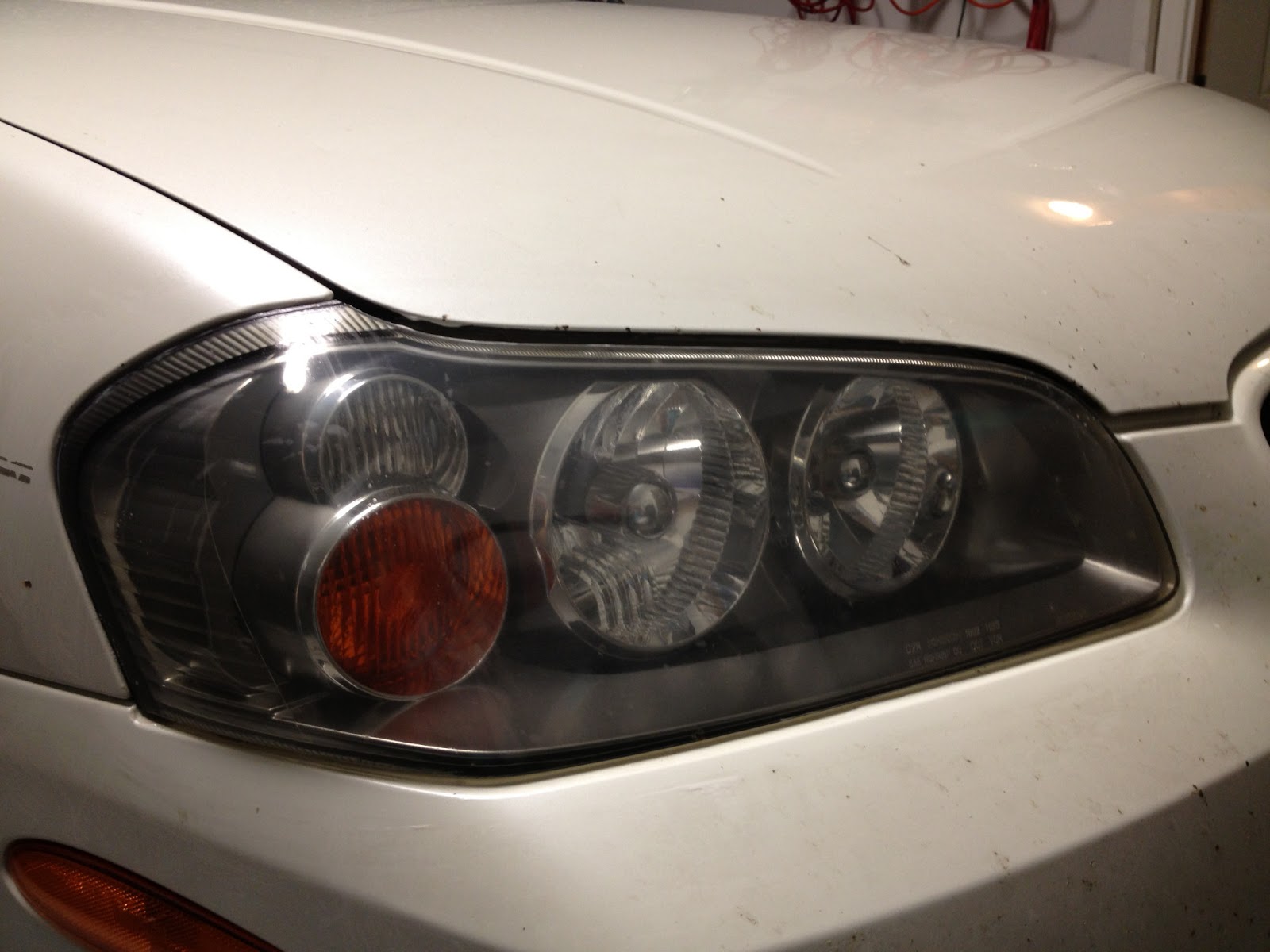
Baking Soda:1; Toothpaste:0
Baking Soda Headlight Cleaner
You Will Need:
Baking soda
Water
Rag
Directions:
Mix baking soda and water together until you get a thick paste. Using a damp rag, rub the mixture all over your headlight until all the dirt and gunk is off. Wipe the headlight clean with a wet rag.
Both headlights on my husbands car were looking pretty grungy and in serious need of a make over.
I scrubbed baking soda all over one headlight.....
Then rubbed toothpaste all over the other one.
The Verdict: Both headlights looked equally clean and the baking soda was just as easy to use as the toothpaste was. However, the headlight with the baking soda stayed cleaner longer. The headlight with the toothpaste started to look foggy again in just about 2 days while the headlight with the baking soda stayed clean for a week.
Baking Soda:1; Toothpaste:0
Wednesday, May 15, 2013
Homemade Garbage Disposal Cleaner
I've been pretty fortunate when it comes to garbage disposals. I've never had a problem with one getting a funky rotting smell that some can get. I don't know if it's the type of garbage disposals I've had, or if it's because I tend to run them for an extremely long time ensuring nothing is left in there.
Regardless of never having a stink issue, I wanted to try a homemade garbage disposal cleaner to see if it made a nice citrus smell in my disposal.
Homemade Garbage Disposal Refreshers
You Will Need:
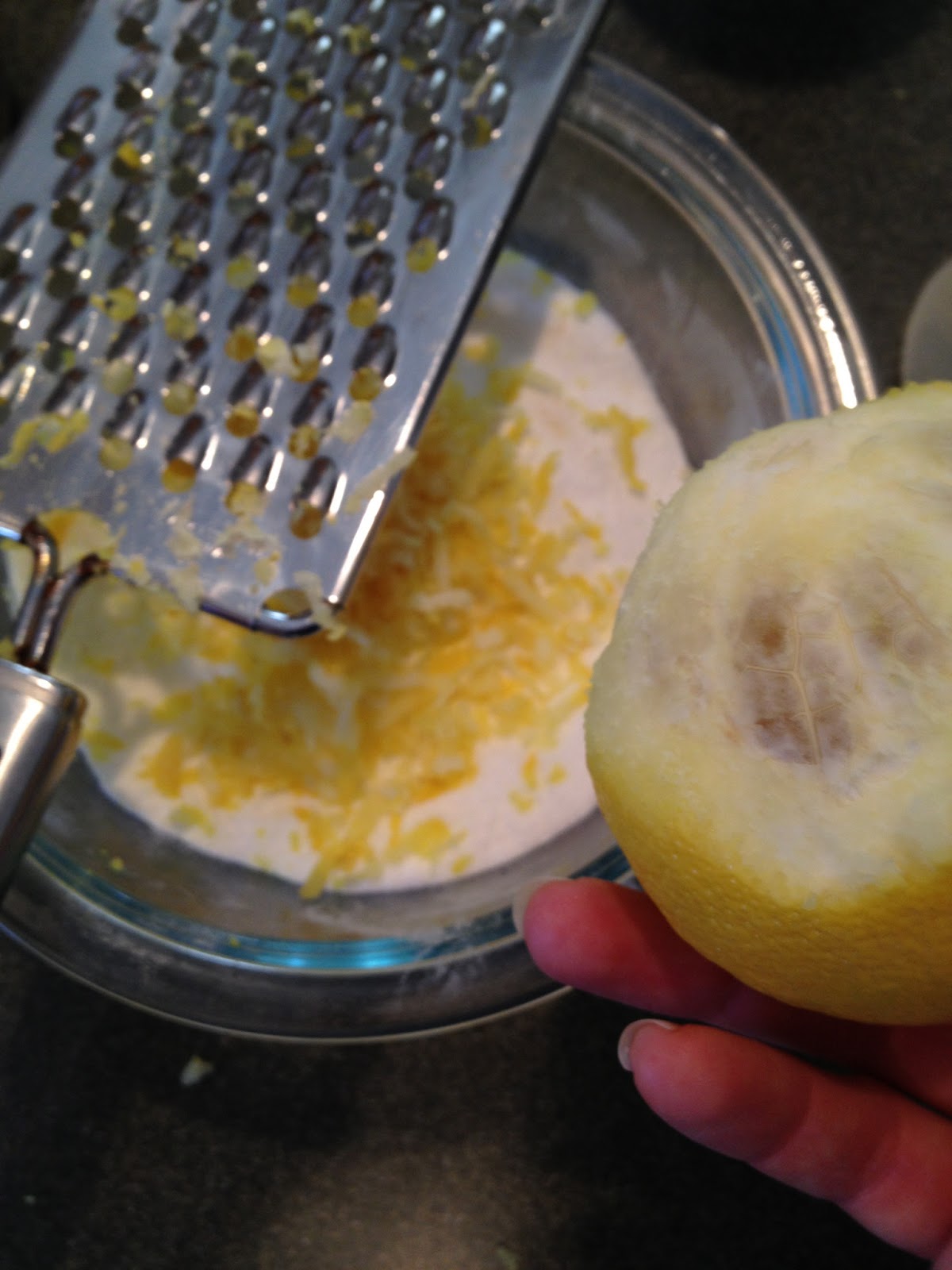
Measure and add the baking soda and salt to a small mixing bowl, and give a stir, ensuring the mixture isn't lumpy. Now grate the lemon peel into the mixture along with adding the liquid dish soap. Slice the lemon in half, and squeeze the juice into the mixture. Continue stirring and adding juice until the mixture resembles course sand. Cover a sheet pan with parchment paper, use a small spoon or scoop to mold the half rounds, and then tap them out onto the pan. A rounded teaspoon measuring spoon works wonderfully. Continue molding the refreshers until the mixture is gone. Allow to dry overnight. Place the dried garbage disposal refreshers in a sealable container. When your sink isn't smelling fresh, simply place a few in the disposal, and flip the switch.
I mixed all my ingredients together and was pretty surprised at how much of the lemon peel I was able to grate off. I was worried that my big cheese grater wasn't going to work on the lemon, but it worked just fine and the bigger lemon peel pieces blended in ok.

Using a teaspoon, I was able to get 61 disks and the whole process only took me about 10 minutes.
The Verdict: The next day I grabbed one and was impressed with how hard they were. If I squeezed one it would break, but they were pretty tough. I used one in my disposal and didn't notice any difference. So I used another one, and I still didn't notice anything. At that point I grabbed a flashlight, stuck my head in the sink and tried to see if my garbage disposal looked any cleaner. This action created a flashback to The Incredible Shrinking Woman.
My disposal did look cleaner but I started to realized that it was going to be hard to give an opinion on this when I didn't really have one. So I recruited my friend over at http://superveggiemom.com/ and here is what she had to say;
"My previous experience is with Plink brand garbage disposal cleaner/deodorizers, in both lemon and orange scents. I have used them when the sink area was starting to smell funky or we'd put some stinky stuff through the disposal. They eliminate the bad odors and when you run the hot water for a couple days after, it renews the citrus scent. The homemade ones didn't seem to leave any particular scent, although they reduced the bad ones. As for the cleaning action, I did carefully peek down the disposal and it looked less funky.
Frankly, for the time and money, one could probably achieve the same effect with lemon slices."
So it sounds like these may or may not be worth the effort, it probably just depends on how funky your disposal is and if you want to invest the time to make them. Either way, just check your disposal before you turn it on, you never know if you're going to find a stray fork or Lily Tomlin.
Regardless of never having a stink issue, I wanted to try a homemade garbage disposal cleaner to see if it made a nice citrus smell in my disposal.
Homemade Garbage Disposal Refreshers
You Will Need:
- 3/4 cup baking soda
- 1/2 cup salt
- 1/2 teaspoon liquid dish soap
- 1 lemon
- Sheet pan
- Parchment paper
- Small spoon or scoop
- Sealable glass jar
Measure and add the baking soda and salt to a small mixing bowl, and give a stir, ensuring the mixture isn't lumpy. Now grate the lemon peel into the mixture along with adding the liquid dish soap. Slice the lemon in half, and squeeze the juice into the mixture. Continue stirring and adding juice until the mixture resembles course sand. Cover a sheet pan with parchment paper, use a small spoon or scoop to mold the half rounds, and then tap them out onto the pan. A rounded teaspoon measuring spoon works wonderfully. Continue molding the refreshers until the mixture is gone. Allow to dry overnight. Place the dried garbage disposal refreshers in a sealable container. When your sink isn't smelling fresh, simply place a few in the disposal, and flip the switch.
I mixed all my ingredients together and was pretty surprised at how much of the lemon peel I was able to grate off. I was worried that my big cheese grater wasn't going to work on the lemon, but it worked just fine and the bigger lemon peel pieces blended in ok.
The Verdict: The next day I grabbed one and was impressed with how hard they were. If I squeezed one it would break, but they were pretty tough. I used one in my disposal and didn't notice any difference. So I used another one, and I still didn't notice anything. At that point I grabbed a flashlight, stuck my head in the sink and tried to see if my garbage disposal looked any cleaner. This action created a flashback to The Incredible Shrinking Woman.
My disposal did look cleaner but I started to realized that it was going to be hard to give an opinion on this when I didn't really have one. So I recruited my friend over at http://superveggiemom.com/ and here is what she had to say;
"My previous experience is with Plink brand garbage disposal cleaner/deodorizers, in both lemon and orange scents. I have used them when the sink area was starting to smell funky or we'd put some stinky stuff through the disposal. They eliminate the bad odors and when you run the hot water for a couple days after, it renews the citrus scent. The homemade ones didn't seem to leave any particular scent, although they reduced the bad ones. As for the cleaning action, I did carefully peek down the disposal and it looked less funky.
Frankly, for the time and money, one could probably achieve the same effect with lemon slices."
So it sounds like these may or may not be worth the effort, it probably just depends on how funky your disposal is and if you want to invest the time to make them. Either way, just check your disposal before you turn it on, you never know if you're going to find a stray fork or Lily Tomlin.
Wednesday, May 8, 2013
Rust-eze
Remember my Mater look alike muffin tin?
Before I tossed it out, I spent some time trying a few rust removal home remedies.
I searched the Internet and found four different methods I wanted to try.
Coke's Verdict: I had always heard that coke could take rust off a nail. This was the perfect chance to play my own version of Mythbusters. I poured some coke into one of the muffin tins then let it sit over night.
Unfortunately (or fortunately if your a Coke drinker) I think this myth is busted. It took a little bit of the rust off but not a whole lot. It might have taken off more rust if I had left it longer, but I really don't want a rusty Coke filled muffin tin in my kitchen.
Hydrogen peroxide mixed with cream of tartar Verdict: I mixed the two together until I had a thick paste. Then using a toothbrush I scrubbed the mixture onto the rust. Bubkiss! All it did was lighten the color of the rust.
Lemon juice mixed with borax Verdict: I mixed the two together until I had a thick paste then I scrubbed the mixture into the rust using a toothbrush. (In case you missed it, that was the exact same method I did with the cream of tartar) It did slightly better then the previous method, but still not much.
Lemon Juice's Verdict: I poured some lemon juice in one of the tins then left it over night. It didnt' get everything, but it made a significant difference.
This of course got me curious as to how lemon juice would work on other things. So I dug around in my kitchen some more and found a knife and can opener that were looking a bit sad. I let them sit in a cup of lemon juice for about an hour and was pleasantly surprised at the results.
If all else fails then just do what I did, put your item out of it's misery by tossing it and just go buy a new one.
Subscribe to:
Comments (Atom)